
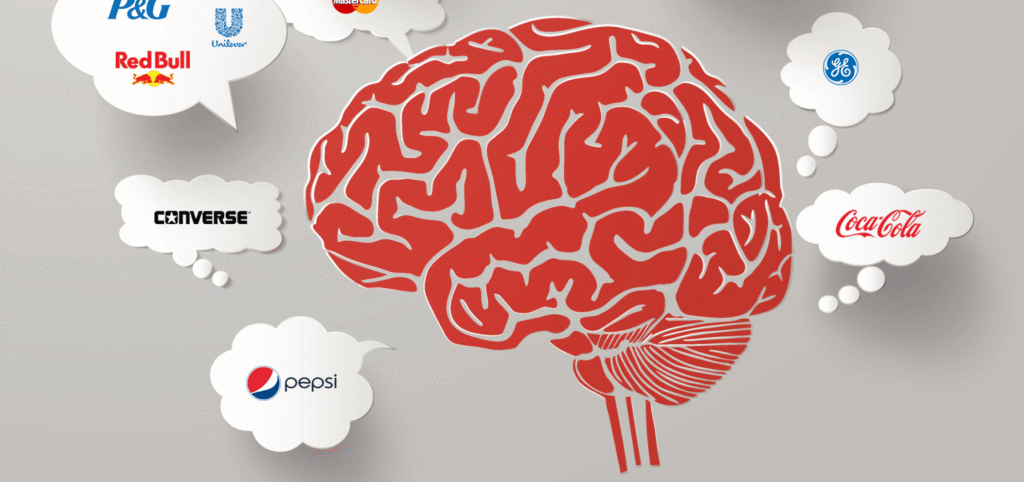
Ever wondered why some logos feel instantly iconic, while others fade into obscurity? The answer might lie in the intriguing field of neuromarketing. In case you don’t know, logo designing is more than what you see with the eye, it is a tiny chunk of an elaborate marketing strategy and you’re about to learn everything right here!
More Than Meets the Eye
Logo design is not just a matter of choosing colors or shapes that look appealing. It’s a vital part of your marketing strategy, a small but powerful symbol that carries the weight of your brand identity. A well-designed logo can capture your brand’s essence in one simple visual, communicating your values, your promise, and the feeling you want your audience to associate with you.
Every detail in a logo, from the hue of a color to the thickness of a line, influences how our brain perceives and remembers it. Colors evoke emotion: blue conveys trust, red signals passion, yellow expresses optimism. Shapes speak silently: circles suggest warmth, triangles innovation, squares stability. Even typography has its own voice: serif fonts signal tradition, sans-serif modernity, and script fonts elegance and individuality.
The Neuromarketing Perspective
Neuromarketing studies how the human brain responds to marketing stimuli and when it comes to logos, this means understanding how consumers unconsciously process visual signals.
A successful logo speaks to the brain effortlessly. Simplicity makes it easier to remember. Symmetry and balance create a sense of harmony. Distinctiveness ensures long-term recall.
Our brains crave patterns, but they also love surprises. The most iconic logos strike that perfect balance, simple enough to be recognizable, yet unique enough to stand out.
The Logo as Your Silent Brand Ambassador
A logo isn’t just a graphic element, it’s the most powerful representative of your brand across every point of contact. Before a customer reads your slogan or explores your products, your logo has already created the first impression. And that happens in just a few milliseconds.
That’s why major brands often evolve their logos over time. They aren’t merely changing their appearance; they’re aligning with new emotional cues that reflect their audience’s changing psychology and expectations.
How to Create a Logo That Connects Emotionally
An unforgettable logo combines art with science. It should have a clear purpose, evoke emotion, be simple enough to remember, and remain consistent across every platform. When these elements work in harmony, a logo becomes a neural shortcut to your brand’s identity, a visual trigger for trust, familiarity, and connection.
Final Thoughts
Designing a logo isn’t just an artistic endeavor; it’s a psychological process. Every line, color, and shape communicates with the human subconscious. And that’s where the true power of a successful logo lies, in how it makes the brain feel. Because a logo isn’t just design. It’s neuromarketing in action.